
PEDS
Second Generation Antipsychotic Use in Pediatrics
- calendar_today Tuesday, Jun. 9
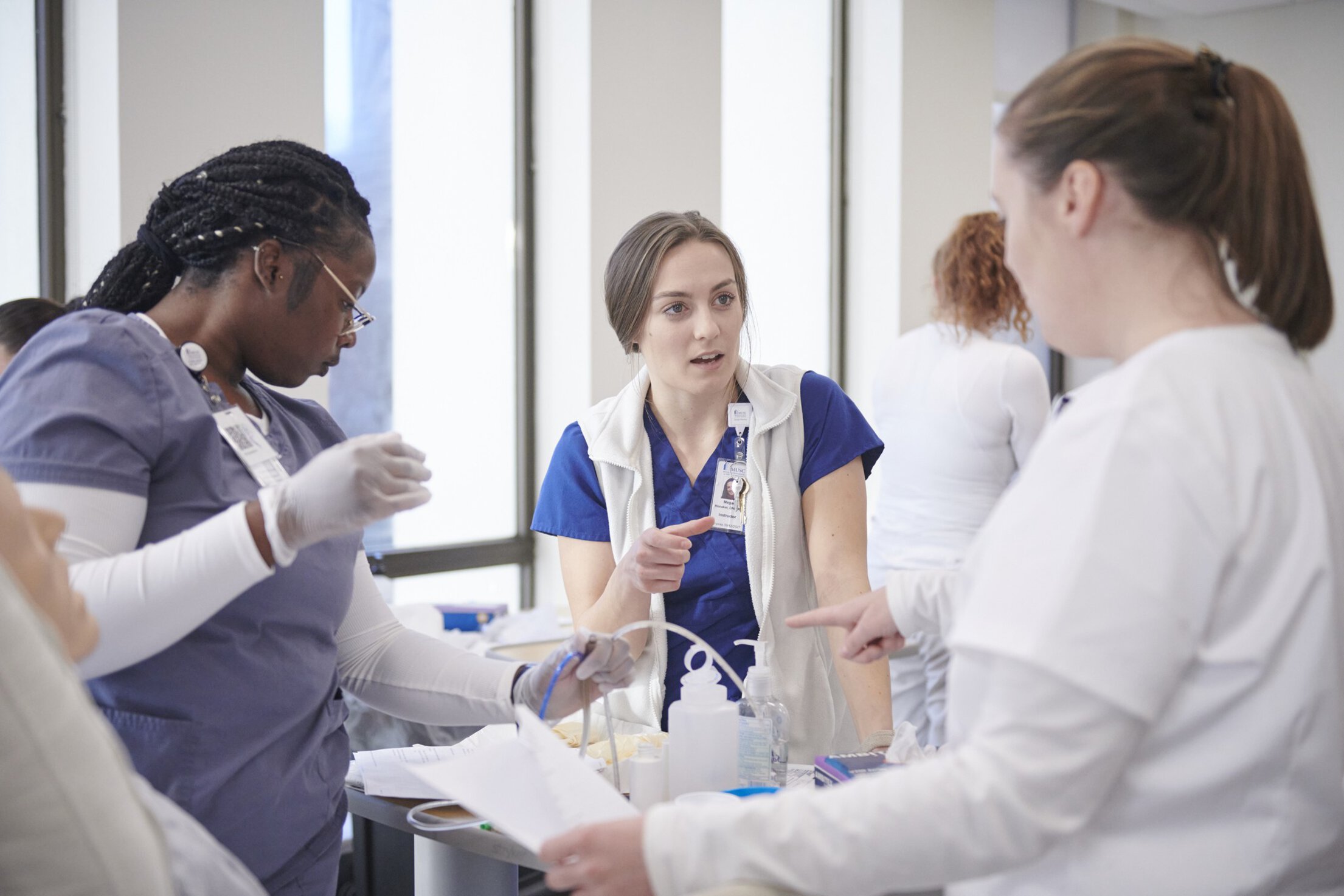
Advance your career with a program that values your experience as a registered nurse and builds skills that expand your impact. The RN-to-BSN program at MUSC provides a purposeful path that blends online learning with real-world application. Learn from faculty who link coursework to care challenges across communities. The curriculum highlights leadership, care coordination, communication and the use of evidence to improve outcomes. Designed for working professionals, the program fosters collaboration and reflection in a supportive cohort. From the first course, you gain tools to elevate practice quality, strengthen teamwork and move with confidence toward advanced roles or future study.
Fall 2026
August 15- June 30
Advance your nursing career through flexible, structured online coursework built for working professionals, paired with in-person clinical practicums that strengthen your impact in practice.
When you join the RN-to-BSN program at MUSC, you are stepping into a learning pathway that respects your professional experience and intentionally builds the leadership, communication, and critical thinking skills that today’s nurses need. The program is designed for working registered nurses who want to deepen their practice, enhance their influence in complex care environments, and prepare for future roles or continued study.
Your coursework is delivered primarily online in an asynchronous format, allowing you to balance work, life, and study. The curriculum has been thoughtfully structured so that each course builds on the last, helping you connect concepts like health systems leadership, information management, and community-focused nursing to the care you provide every day.
From the moment you begin, you engage with peers who share your professional background and goals. Faculty facilitate meaningful dialogue that connects academic concepts to real clinical challenges. You will reflect on your practice, collaborate with others, and grow your capacity to influence team-based care and quality improvement.
The program weaves practical, application-oriented experiences throughout your coursework. You will explore evidence-based strategies that enhance patient outcomes, practice leadership skills relevant to today’s health systems, and refine your ability to communicate effectively within interprofessional teams.
Whether you envision advancing into leadership roles, strengthening your ability to coordinate care across communities, or setting the stage for graduate study, the RN-to-BSN curriculum equips you with the competencies most valued in professional nursing today.
The Bachelor of Science in Nursing - RN-to-BSN curriculum consists of 35 credits and is designed to be completed in three semesters. Below is the standard plan of study outlining the structured progression of coursework as you advance through the program.
| Course ID | Course Title | Credits |
|---|---|---|
| NURSU427 | Health Systems & Policy | 3 |
| NURSU412 | Information Management | 2 |
| NURSU359 | Healthy Aging & Health Promotion | 4 |
| NURSU411 | Research & Evidence-Based Practice | 3 |
| Semester Total | 12 | |
| Course ID | Course Title | Credits |
|---|---|---|
| NURSU357 | Health Assessment for RN | 3 |
| NURSU358 | Pathophysiology | 3 |
| NURSU413 | Community & Population Focused Nursing | 6 |
| NURSU476 | Professional Practice Seminar I RN | 1 |
| Semester Total | 13 | |
| Course ID | Course Title | Credits |
|---|---|---|
| NURSU426 | Leadership and Management | 3 |
| NURSU477 | Professional Practice Seminar II RN* | 1 |
| NURSU478 | Professional Practice Seminar III RN** | 1 |
| NURSU428 | Practicum-Clinical Management & Decision-Making | 5 |
| Semester Total | 10 | |
| Curriculum Total | 35 | |
| Prerequisite Credit Total | 60 | |
| Pre-Licensure Total | 30 | |
| Required Credit Total | 125 | |
* Taken in the first six weeks of the term
** Taken in the second seven weeks of the term
The RN-to-BSN Program provides rich and varied opportunities to assist the practicing nurse/student integrate new practice-related knowledge and skills that will transition them from the associate degree or diploma to the baccalaureate level of proficiency.
There are clinical courses with a focus on the following: gerontology, community and public health and leadership. The clinical hours will consist of a project that may include virtual or live work.
Connect with faculty during virtual office hours, participate in cohort-based peer collaboration and attend hybrid events and information sessions to stay engaged across our campus community.
Discover key information about application steps and required documentation to help you move forward with confidence.
All applicants must:
At MUSC, we actively support all students to ensure their success in both academic and clinical settings. To support this goal, the university outlines the essential qualities and functional abilities required for participation in its educational programs. These include a range of observational, communication, motor, intellectual and behavioral skills necessary for safe and effective practice.
The following prerequisite coursework is required for all applicants.
| Prerequisite Coursework | Credit Hours |
|---|---|
|
Human Anatomy A survey course of the physical structure of human cells, tissues, and organs. This may be a stand-alone human anatomy course, or it may be a combined human anatomy and physiology course. If it is a stand-alone human anatomy course, a stand-alone human physiology course is also required. If it is a combined course, a second human anatomy and physiology course will be required to meet the minimum course content requirements. It must include a lab component. Comparative anatomy and physiology courses do not meet the minimum course content requirements. |
4 |
|
Human Physiology A survey course of the function and regulation of the human body and physiological integration of organ systems to maintain homeostasis. Course content should cover the major function of the major organs and organ systems of the body. This may be a stand-alone human physiology course, or it may be a combined human anatomy and physiology course. If it is a stand-alone human physiology course, a stand-alone human anatomy course is also required. If it is a combined course, a second human anatomy and physiology course is also required to meet the minimum course content requirements. It must include a lab component. Comparative anatomy and physiology courses do not meet the minimum course content requirements. |
4 |
|
Lifespan Human Growth & Development A survey course of theory and research concerned with human growth and development from conception/birth through senescence and death. A course in child development will not fulfill this requirement. The CLEP and Excelsior College exams taken after 2001 are acceptable. |
3 |
|
Microbiology A survey course of morphology, structure, metabolism, and growth of microorganisms, including viruses, bacteria, protozoa, and parasites. Basic concepts of virology, epidemiology, and pathogenicity should be included. Must include a laboratory component. |
4 |
|
Science Electives Biology, chemistry, and physics courses with a laboratory component are preferred. |
4 |
|
Statistics A course that emphasizes basic statistical concepts. Topics should include descriptive statistics, probability, sampling distributions, hypothesis testing, simple linear regression and correlation, and analysis of variance. |
3 |
The following coursework is required for applicants without a bachelor's degree.
| Prerequisite | Credit Hours |
|---|---|
|
English Composition/Communication Coursework that emphasizes expository and critical writing and utilizes selected works of literature for analysis and composition topics. Can also include communication courses (interpersonal and public speaking). |
6 |
|
Social Sciences and Humanities Electives College transfer coursework is acceptable including anthropology, psychology, sociology, geography, art, literature, philosophy, religion, music, history, theater, economics, political science, and government. |
15 |
|
General Electives College transfer coursework (non-nursing) is acceptable. Any computer information, public speaking, additional math, and additional science courses are highly recommended. General rule: Any course that is college transfer eligible, the course number is 101 or higher, and has not been used to meet other specific prerequisite coursework may be used. |
17 |
Before applying, it's essential to ensure that any prior coursework meets the admissions requirements. MUSC provides a helpful reference list of frequently approved prerequisite courses to guide you in understanding which classes may satisfy your program's requirements.
MUSC's College of Nursing degree programs are unable to admit international students requiring an F-1 visa. Applications will only be accepted from U.S. citizens, permanent residents, or those holding other valid nonimmigrant visa classifications that allow participation in lawful study while in the United States.
The following process outlines how and when your materials will be reviewed.
Review tuition, program costs and financial support for the RN-to-BSN program so you can plan your next step in advancing your nursing career.
Tuition and fees listed below apply to the 2025 to 2026 academic year and are per semester unless otherwise noted.
| Fee Type | Fee |
|---|---|
| Application Fee (per application) | $50 |
| Matriculation Fee (upon applicant acceptance) | $485 |
| Online Program Fee (additional fee per credit hour) | $70 |
| Tuition/Fee Type | Fall | Spring | Summer | Annual |
|---|---|---|---|---|
| In-State Tuition | $5,480 | $5,480 | $5,480 | - |
| Out-of-State Tuition | $6,104 | $6,104 | $6,104 | - |
| Lab Fee | $330 | $330 | $330 | - |
| Program Fee | $270 | $270 | $270 | - |
| Tuition/Fee Type | Fall | Spring | Summer | Annual |
|---|---|---|---|---|
| In-State Tuition (per credit hour) | $481 | $481 | $481 | - |
| Out-of-State Tuition (per credit hour) | $526 | $526 | $526 | - |
| Lab Fee | $330 | $330 | $330 | - |
| Part-Time Student Fee | $861 | $861 | $861 | - |
| Program Fee | $135 | $135 | $135 | - |
The Cost of Attendance, or COA, is an estimate of a student's total educational expenses for an enrollment period. The information below reflects the 2025-26 academic year. The COA includes tuition and fees, which are direct costs billed to you by the university, as well as indirect costs you may incur, including food, housing, transportation, books, etc.
The COA is important because it reflects the maximum amount a student may borrow in an academic year to attend the program.
With careful budgeting, students can substantially lower their indirect costs, so their actual expenses are well below the COA. MUSC's Office of Student Financial Literacy can help students develop a budget that supports their educational and personal financial goals.
| Item | Year 1 | Est. Total |
|---|---|---|
| Direct Costs | ||
| In-State Tuition | $16,440 | $16,440 |
| Out-of-state Tuition | $18,312 | $18,312 |
| Fees | $2,560 | $2,560 |
| In-State Total Direct Costs | $19,000 | $19,000 |
| Out-of-State Total Direct Costs | $20,872 | $20,872 |
| Indirect Costs | ||
| Living Expenses (Food and Housing) | $24,882 | $24,882 |
| Miscellaneous Personal Expenses | $2,640 | $2,640 |
| Transportation | $2,970 | $2,970 |
| Books, Course Materials, Supplies and Equipment | $7,780 | $7,780 |
| Total Indirect Costs | $38,272 | $38,272 |
| In-State Total Costs | $27,272 | $27,272 |
| Out-of-State Total Costs | $59,144 | $59,144 |
MUSC offers scholarships for which you may be eligible. Some are awarded based on academic achievement; others are awarded based on community service, for example. However, the majority of scholarships awarded at MUSC are based on financial need. This means that these scholarships are only awarded to students who need some financial assistance to cover the cost of tuition and fees. If you would like to be considered for a financial need-based scholarship, you must have an up-to-date Free Application for Federal Student Aid (FAFSA) on file. Make sure you list the Medical University of South Carolina on your FAFSA form, along with MUSC's code: 003438. We encourage you to submit your FAFSA as early as possible. It is recommended to submit your FAFSA in January if you plan to enroll in the fall.
Source: Payscale, Inc. (2025). Retrieved Aug. 20, 2025, from https://www.payscale.com

The application, the application fee, official transcripts from all colleges/universities attended (even if it was just one course), three completed reference forms (provided with the application), a resume and a response to a short 100-word essay.
MUSC's RN-to-BSN program is approved to offer online distance education to students in all SARA states and California. Out-of-state applicants and students are responsible for contacting their State Board of Nursing to determine any requirements that are needed in order to complete clinical rotations as a distance student. The NCSBN provides a quick search of Prelicensure Distance Education Requirements per state.
We do offer a campus virtual tour and multiple information sessions to educate prospective students about the programs we offer in the College of Nursing. For more information on current sessions and when tours will resume, please visit our campus tours page.
Many prospective students find it helpful to request an unofficial transcript evaluation. Please scan and e-mail your transcripts to conservices@musc.edu.
Yes. Coursework may be in progress when you make an application to the College of Nursing. However, it must be completed with a grade of "C" or better prior to your matriculation (or start) date at the College of Nursing. Students may not begin their MUSC coursework without having all the prerequisite coursework completed.
No, we must receive the official reference forms. Generally, we prefer academic and/or professional references. These forms will be available when you begin the application process. They may be sent to the person providing the reference electronically or you may download and provide to the reference personally.
The rubric for admission includes:
Online students will have access to the College of Nursing faculty and advisors through established "office hours" when synchronous communication can occur via videoconferencing, email, or telephone. Faculty and students may choose to make additional arrangements to meet. Students at a distance can use regional experts as preceptors. Technology support is available Monday through Friday via the Technology Help Desk.
The Board of Nursing for each state dictates licensure requirements for Registered Nurses. MUSC College of Nursing applicants and students should familiarize themselves with the requirements for the state(s) in which they intend to practice using this site.
Anchored in integrity, continuous learning and service, the program equips practicing nurses to translate evidence-based strategies into meaningful health outcomes for individuals and communities.
The RN-to-BSN program aims to prepare graduates to:
Upon completion of the RN-to-BSN program, graduates should be able to:
To lead a bold new era in nursing.
At the core of our program, we are guided by a commitment to the following values that drive our mission:
To transform health care through education, practice and research.
Discover alum momentum and career achievements from innovative projects to leadership roles through MUSC College of Nursing news and student highlights.
Grounded in national accreditation, this RN-to-BSN program reflects MUSC's standards for program quality and its graduates are eligible for professional licensure in their respective states.
The RN-to-BSN program at MUSC is accredited by the Commission on Collegiate Nursing Education (CCNE) of the AACN. CCNE accreditation means that our program meets or exceeds established standards for a professional program leading to the Bachelor of Science in Nursing (BSN) degree. Whereas accreditation applies to training programs, licensure applies to individuals.
Our program prepares students for and makes them eligible to take the National Council Licensure Examination for Registered Nurses (NCLEX-RN) through the National Council of State Boards of Nursing (NCSBN), which all individuals must pass in order to become a licensed registered nurse (RN). Passing the NCLEX-RN is necessary, but it may not be sufficient to practice in all states as licensure requirements for registered nurses are determined by each state’s Board of Nursing. All applicants should review the licensure criteria for the state or states where they plan to practice. A helpful resource is available through NursingLicensure.org.
Passing the NCLEX-RN satisfies licensure requirements for the state of South Carolina.