

Department of Pediatrics
Strategies to Support Autistic Individuals in Healthcare Encounters
- calendar_today Tuesday, Oct. 13, 2026

The Doctor of Philosophy (Ph.D.) in Nursing Science at MUSC prepares nurse scholars to create knowledge that improves lives. Students build strong foundations in research design, measurement and scientific writing while engaging with faculty whose work addresses real health needs. The online format supports working professionals without compromising access to mentorship, collaboration and research opportunities. Through thoughtful guidance, students refine ideas into rigorous studies, share findings that influence practice and policy and grow as ethical leaders ready to shape the future of nursing science. Students strengthen scientific communication, apply advanced analysis and connect across disciplines within MUSC’s collaborative community.
Fall 2027
Opens: Aug. 15, 2026
Final deadline: May 1, 2027
Benefit from individualized faculty mentorship, collaborative learning and immersive research training tailored to your academic and career goals.
The Doctor of Philosophy in Nursing Science at MUSC is designed for nurses ready to lead transformative research that makes a measurable difference in health and health care. In this program, you will shape your scholarly identity while deepening your understanding of theory, methodology, and scientific inquiry within the supportive context of an academic health center.
Your journey begins with coursework that guides you through philosophical and theoretical foundations, advanced research design, and methods that prepare you to ask meaningful questions grounded in nursing science. Whether your interests lie in health systems, patient outcomes, health equity, or interdisciplinary inquiry, you will develop the tools to design and conduct rigorous studies that address complex health challenges.
From your first semester, you partner with faculty who bring active research programs and profound expertise to your learning experience. This individualized mentorship ensures that your work is intellectually grounded, methodologically sound, and closely aligned with your professional aspirations. You will receive guidance on refining research questions, selecting appropriate methods, analyzing data, and communicating findings to diverse audiences.
In this program, you are part of a community of nurse scholars, each contributing unique perspectives and expertise. You engage in rich academic dialogue, collaborate across disciplines, and learn to communicate your work compellingly through writing, presentations, and digital scholarship. MUSC’s academic environment encourages curiosity, ethical inquiry, and scientific leadership that extends beyond nursing to impact broader health care contexts.
Your Ph.D. curriculum is delivered primarily online, allowing you to continue professional and personal commitments while progressing toward your doctoral goals. At the same time, the program’s structure ensures academic rigor and meaningful engagement with research principles that will support your future contributions to scholarship and practice.
The full-time Doctor of Philosophy in Nursing Science curriculum consists of 67 credits and is designed to be completed in nine semesters. Below is the standard plan of study outlining the structured progression of coursework as you advance through the program.
| Course ID | Course Title | Credits |
|---|---|---|
| NRPHD811 | Philosophical & Theoretical Underpinnings of Nursing Science | 3 |
| NRPHD813 | Foundations of Scholarship in Nursing Science | 3 |
| NRPHD815 | Design and Methods of Scientific Inquiry | 3 |
| Semester Total | 9 | |
| Course ID | Course Title | Credits |
|---|---|---|
| NRPHD801 | Advanced Quantitative Research Methods | 3 |
| NRPHD819 | Qualitative Research Methods | 3 |
| NRPHD848 | Mentored Res. & Scholarship | 2 |
| ELEC | Elective of choice | 3 |
| Semester Total | 11 | |
| Course ID | Course Title | Credits |
|---|---|---|
| NRPHD823 | Analysis and Application of Theories, Frameworks, and Models | 3 |
| NRPHD825 | Measurement and Instrumentation | 3 |
| NRPHD846 | Mentored Research Practicum 1 | 1 |
| ELEC | Elective of choice | 3 |
| Semester Total | 10 | |
| Course ID | Course Title | Credits |
|---|---|---|
| NRPHD738 | Applied Statistical Methods for Nursing Research | 3 |
| NRPHD833 | Scholarly Synthesis of Scientific Literature | 3 |
| NRPHD847 | Mentored Research Practicum 2 | 1 |
| ELEC | Elective of choice | 3 |
| Semester Total | 10 | |
| Course ID | Course Title | Credits |
|---|---|---|
| NRPHD807 | Advanced Applied Statistical Methods for Nursing Research | 3 |
| NRPHD839 | Applied Study Design and Methods | 3 |
| NRPHD736 | Research Ethics | 3 |
| Semester Total | 9 | |
Year 2, Summer
| Course ID | Course Title | Credits |
|---|---|---|
| NRPHD726 | Transition to Candidacy | 4 |
| Semester Total | 4 | |
| Course ID | Course Title | Credits |
|---|---|---|
| NRPHD990 | Dissertation* | 5 |
| Semester Total | 5 | |
| Course ID | Course Title | Credits |
|---|---|---|
| NRPHD990 | Dissertation* | 5 |
| Semester Total | 5 | |
| Course ID | Course Title | Credits |
|---|---|---|
| NRPHD990 | Dissertation* | 4 |
| Semester Total | 4 | |
| Curriculum Total | 67 | |
The part-time Doctor of Philosophy in Nursing Science curriculum consists of 67 credits and is designed to be completed in 12 semesters. Below is the standard plan of study outlining the structured progression of coursework as you advance through the program.
| Course ID | Course Title | Credits |
|---|---|---|
| NRPHD813 | Foundations of Scholarship in Nursing Science | 3 |
| NRPHD815 | Design and Methods of Scientific Inquiry | 3 |
| Semester Total | 6 | |
| Course ID | Course Title | Credits |
|---|---|---|
| NRPHD801 | Advanced Quantitative Research Methods | 3 |
| NRPHD819 | Qualitative Research Methods | 3 |
| Semester Total | 6 | |
| Course ID | Course Title | Credits |
|---|---|---|
| NRPHD825 | Measurement and Instrumentation | 3 |
| ELEC | Elective of choice | 3 |
| Semester Total | 6 | |
| Course ID | Course Title | Credits |
|---|---|---|
| NRPHD811 | Philosophical and Theoretical Underpinnings of Nursing Science | 3 |
| NRPHD738 | Applied Statistical Methods for Nursing Research | 3 |
| Semester Total | 6 | |
| Course ID | Course Title | Credits |
|---|---|---|
| NRPHD848 | Mentored Research | 2 |
| NRPHD807 | Advanced Applied Statistical Methods for Nursing Research | 3 |
| ELEC | Elective of choice | 3 |
| Semester Total | 8 | |
| Course ID | Course Title | Credits |
|---|---|---|
| NRPHD823 | Analysis and Application of Theories, Frameworks, and Models | 3 |
| NRPHD846 | Mentored Research Practicum 1 | 1 |
| Semester Total | 4 | |
| Course ID | Course Title | Credits |
|---|---|---|
| NRPHD847 | Mentored Research Practicum 2 | 1 |
| NRPHD833 | Scholarly Synthesis of Scientific Literature | 3 |
| ELEC | Elective of choice | 3 |
| Semester Total | 7 | |
| Course ID | Course Title | Credits |
|---|---|---|
| NRPHD839 | Applied Study Design and Methods | 3 |
| NRPHD736 | Research Ethics | 3 |
| Semester Total | 6 | |
| Course ID | Course Title | Credits |
|---|---|---|
| NRPHD726 | Transition to Candidacy and Career Development | 4 |
| Semester Total | 4 | |
| Course ID | Course Title | Credits |
|---|---|---|
| NRPHD990 | Dissertation* | 5 |
| Semester Total | 5 | |
| Course ID | Course Title | Credits |
|---|---|---|
| NRPHD990 | Dissertation* | 5 |
| Semester Total | 5 | |
| Course ID | Course Title | Credits |
|---|---|---|
| NRPHD990 | Dissertation* | 4 |
| Semester Total | 4 | |
| Curriculum Total | 67 | |
* A minimum of fourteen credit hours of NRPHD 990 are required. Credits above that amount maybe required, at three credits per semester, until the dissertation work is completed.
A minimum of nine credits of research or content-focused electives must be taken.
| Course ID | Course Title | Credits |
|---|---|---|
| NRPHD708 | Advanced Health Policy & Advocacy | 3 |
| NRPHD829 | Mixed Methods Research | 3 |
| NRPHD840 | Nursing Workforce Research | 3 |
| NRPHD842 | Intervention Development, Dissemination, & Implementation | 3 |
| NRPHD843 | Palliative Care Research | 3 |
| NRPHD844 | Community Engaged Research | 3 |
| NRPHD845 | Trends in Technology Science | 3 |
Additional courses may be taken as research or content-focused electives with permission of the course faculty, research mentor, and Ph.D. Assistant Dean.
| Course ID | Course Title | Credits |
|---|---|---|
| NRPHD800 | Mentored Teaching | 3 |
| NRPHD841 | Mentored Special Topics | 1-9 |
| NURSM615 | Methodology of Online Teaching* | 3 |
| NURSM703 | Instructional Process* | 3 |
| NURSM713 | Curriculum Design & Development* | 3 |
* Required for NFLP recipients if not already a Certified Nurse Educator (CNE)
Engage in mentored research opportunities as you collaborate with faculty members who are at the forefront of behavioral health, program development and implementation science.
Technology Applications Center for Healthful Lifestyles (TACHL): Collaboration opportunities with TACHL, which specializes in the development, testing and dissemination of digital innovations designed to promote health, prevent disease and manage health care effectively.
The Zucker Institute for Innovation Commercialization: Leverage resources from the Zucker Institute to support the commercialization of innovative research, bringing your ideas to life and maximizing their impact.
Connect with fellow scholars and faculty through virtual events, research colloquia and on-campus intensives that foster academic community and growth.
Discover key information about application steps and required documentation to help you move forward with confidence.
All applicants must:
Preference is given to applicants with a cumulative GPA of 3.5 on a 4.0 scale for undergraduate and graduate degree-granting institutions.
At MUSC, we actively support all students to ensure their success in both academic and clinical settings. To support this goal, the university outlines the essential qualities and functional abilities required for participation in its educational programs. These include a range of observational, communication, motor, intellectual and behavioral skills necessary for safe and effective practice.
The following process outlines how and when your materials will be reviewed.
MUSC’s College of Nursing Ph.D. in Nursing Science is able to admit international students requiring an F-1 visa. Applications will be accepted from U.S. citizens, permanent residents, or those holding other valid nonimmigrant visa classifications that allow participation in lawful study while in the United States.
MUSC welcomes international applicants and offers tailored guidance to support you throughout the admission process. View details at International Applicants.
Discover scholarship opportunities and funding support that help you invest in a meaningful, research-driven career in nursing science.
Tuition and fees listed below apply to the 2026-27 academic year and are per semester unless otherwise noted.
| Fee Type | Fee |
|---|---|
| Application Fee (per application) | $50 |
| Matriculation Fee (upon applicant acceptance) | $485 |
| Online Program Fee (additional fee per credit hour) | $70 |
| NRPHD990 Dissertation Course Fee | $326.66 |
| NRPHD829 Mixed Methods Research Course Fee (Elective) | $140 |
| Domestic Student Fee (first semester only) | $50 |
| International Student Fee (first semester only) | $1,500 |
| Tuition/Fee Type | Fall | Spring | Summer |
|---|---|---|---|
| In-State Tuition | $8,116 | $8,116 | $8,116 |
| Out-of-State Tuition | $10,642 | $10,642 | $10,642 |
| Program Fee | $560 | $560 | $560 |
| Tuition/Fee Type | Fall | Spring | Summer |
|---|---|---|---|
| In-State Tuition (per credit hour) | $835 | $835 | $835 |
| Out-of-State Tuition (per credit hour) | $1,098 | $1,098 | $1,098 |
| Part-Time Student Fee | $861 | $861 | $861 |
| Program Fee | $285 | $285 | $285 |
The Cost of Attendance, or COA, estimates the total educational expenses for an enrollment period. The information below reflects the 2026-27 academic year. The COA includes direct costs, such as tuition and fees, billed by the university, as well as indirect costs you may need to plan for, including housing, food, transportation, books and other personal expenses.
The COA helps determine the maximum amount a student may borrow in an academic year and supports funding-related determinations, such as grants, scholarships, loans and others.
Your actual expenses may be lower than the COA, especially with careful budgeting. MUSC's Office of Student Financial Literacy can help you create a budget that supports your education, personal needs and long-term financial goals.
| Item | Year 1 | Year 2 | Year 3 | Est. Total |
|---|---|---|---|---|
| Direct Costs |
||||
| In-State Tuition | $24,348 |
$24,348 |
$24,348 |
$73,044 |
| Out-of-State Tuition | $31,926 | $31,926 | $31,926 | $95,778 |
| Health Insurance | $3,780 | $3,780 | $3,780 | $11,340 |
| Fees | $3,530 | $3,430 | $3,430 | $10,390 |
| In-State Total Direct Costs | $31,658 |
$31,558 |
$31,558 |
$94,774 |
| Out-of-State Total Direct Costs | $39,236 | $39,136 | $39,136 | $117,508 |
| Indirect Costs |
||||
| Living Expenses (Food and Housing) | $24,882 | $24,882 | $24,882 | $74,646 |
| Miscellaneous Personal Expenses | $2,640 | $2,640 | $2,640 | $7,920 |
| Transportation | $2,970 | $2,970 | $2,970 | $8,910 |
| Books, Course Materials, Supplies and Equipment | $9,198 | $5,535 | $1,435 | $16,168 |
| Total Indirect Costs | $39,690 | $36,027 | $31,927 | $107,644 |
| Estimated Total Costs | ||||
| In-State Total Costs | $71,348 |
$67,585 |
$63,485 |
$202,418 |
| Out-of-State Total Costs | $78,926 | $75,163 | $71,063 | $225,152 |
MUSC offers scholarships for which you may be eligible. Some are awarded based on academic achievement; others are awarded based on community service, for example. However, the majority of scholarships awarded at MUSC are based on financial need. This means that these scholarships are only awarded to students who need some financial assistance to cover the cost of tuition and fees. If you would like to be considered for a financial need-based scholarship, you must have an up-to-date Free Application for Federal Student Aid (FAFSA) on file. Make sure you list the Medical University of South Carolina on your FAFSA form, along with MUSC's code: 003438. We encourage you to submit your FAFSA as early as possible. It is recommended to submit your FAFSA in January if you plan to enroll in the fall.
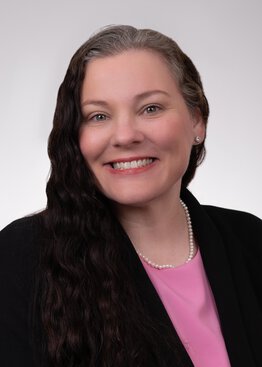
Dr. Diana Layne, PhD, RN, CPHQ, a graduate of MUSC's College of Nursing Ph.D. program and, specializes in caregiving research. Her focus spans professional and family caregivers, initially exploring negative behaviors in healthcare settings and later expanding to faculty and student experiences.
From 2021-2023 she was a SC Clinical and Translational Research Institute (SCTR) KL2 scholar and adapted an existing nurse-led palliative care intervention for use with Alzheimer’s patients and caregivers.
She has participated in numerous dementia clinical trials training programs including the 2021 cohort of the Palliative Care Research Cooperative (PCRC) Clinical Trials Training program as well as the 2022-2023 cohort of Center for Aging and Serious Illness (CASI) Dementia Palliative Care Clinical Trials Training program.
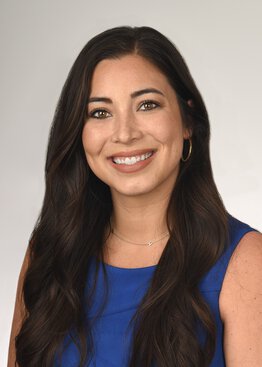
Hannah C. Espeleta, Ph.D., is research assistant professor within the MUSC College of Nursing. She is a licensed clinical psychologist and is nationally certified in Trauma-Focused Cognitive Behavior Therapy and Parent-Child Interaction Therapy. Dr. Espeleta earned her B.A. at Miami University of Ohio and earned her M.S. and Ph.D. in clinical psychology at Oklahoma State University, with an emphasis on child psychology, pediatric psychology, and statistics. She completed her predoctoral clinical internship at the Charleston Consortium within the Trauma Track and her postdoctoral fellowship at MUSC in the National Crime Victims Research and Treatment Center and the College of Nursing. Dr. Espeleta provides clinical supervision, treatment services, and training at MUSC to implement evidence-based mental health assessment and treatment for children and adults exposed to trauma who are enrolled in the Trauma Resilience and Recovery Program (TRRP).
No, we do not require GRE scores in our application. Please review our Eligibility Requirements above.
All students are assigned a research mentor prior to beginning coursework. The research mentor can facilitate networking opportunities with other scientists and scholars and socialize you into the professional role of a nurse scientist.
Additionally, your mentor will help you identify opportunities to disseminate your research through conference presentations and publications in scholarly peer-reviewed scientific journals.
The Ph.D. is a research doctorate. The DNP is a practice doctorate. Graduates of Ph.D. programs conduct research and disseminate their findings, while DNP graduates use research to influence their practice.
Our Ph.D. in Nursing Science program prepares researchers in nursing science who can work in academic or research-intensive institutions. The Ph.D. is the highest degree awarded in academia.
Our DNP program prepares expert advanced nurse practitioners. The purpose of the program is to prepare graduates who will practice nursing at the highest clinical level.
We do offer a campus virtual tour and multiple information sessions to educate prospective students about the programs we offer in the College of Nursing. For more information on current sessions and when tours will resume, please visit our campus tours page.
The full-time study plan requires significant time commitments in and out of the online classroom, making concomitant full-time employment challenging. Part-time employment may lend itself better to your success with the part-time study plan.
A key component of the application process is evaluating our faculty’s research interests and describing how they align with yours. In your application, you should highlight these connections.
We usually accept 10-12 students per year.
Select graduate credits taken at other universities or colleges will be considered for acceptance toward partial fulfillment of the requirements of the Ph.D. in Nursing Science degree. Students must be accepted into the program and at that time, they may petition the Ph.D. Curriculum committee to accept coursework from other programs that may be equivalent to the courses offered at the College of Nursing.
MUSC’s Ph.D. program is approved to offer online distance education for students in all SARA states and California.
Join a community committed to advancing health outcomes through ethical inquiry, scientific curiosity and servant leadership.
The Ph.D. in Nursing Science program aims to prepare graduates to:
Upon completion of the Ph.D. in Nursing Science program, graduates should be able to:
To lead a bold new era in nursing.
To transform health care through education, practice and research.
At the core of our program, we are guided by a commitment to the following values that drive our mission:
Explore how MUSC nursing scholars are expanding knowledge, driving innovation and shaping the future of health through impactful research.

The Medical University of South Carolina is accredited by the Southern Association of Colleges and Schools Commission on Colleges (SACSCOC) to offer Doctor of Philosophy in Nursing Science. To learn more about MUSC's accreditation and find contact details, please visit our Accreditation page.