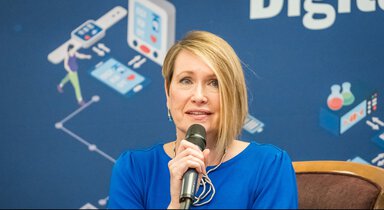

Assistant Professor Katherine Chike-Harris, DNP, APRN, CPNP-PC, FNP-BC, CNE has always embraced the importance of preparing MUSC College of Nursing students for the variety of situations that they will encounter during practice, with telehealth being at the forefront of her work. Now, her forward-thinking project expands the possibilities of telehealth education not only for the College of Nursing but also for the entirety of MUSC.
Last fall, Chike-Harris was named an awardee for the 2022-23 MUSC Education Innovation Fund, which seeks out innovative educational approaches, techniques and programs to provide one-time funding for piloting or further evaluation. Her plan is to provide a scope, curriculum and actionable ways for embedding the work of telehealth into the College of Nursing’s courses, with an emphasis on scenarios and experiential learning. Chike-Harris stressed the need for undergraduate students to become comfortable with these interactions, especially with the recent and rapid acceleration of telehealth and the demand for students to be proficient in this area.
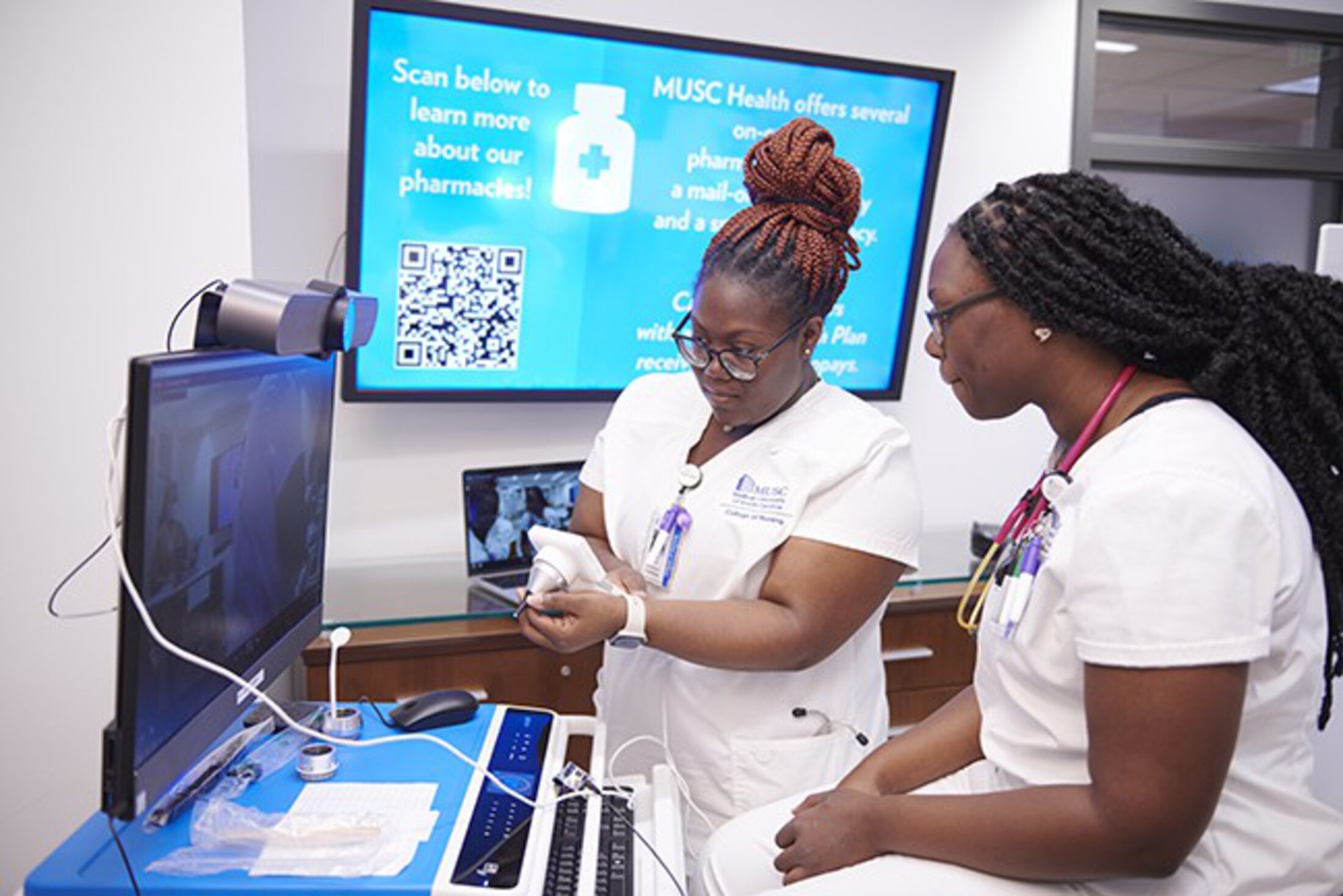
“I wanted to develop a simulated visit where our Bachelor of Science in Nursing students will have the experience of working with the telehealth cart, troubleshooting the cart and then presenting patients to our Doctor of Nursing Practice students,” she noted. Exposing students to these scenarios is key to making sure that they are equipped for practice and ready to take on any situation that they encounter. “Being exposed to this education will prepare students to help practices integrate,” she explained. “Especially for the undergraduate students, having that experience in the classroom will translate to post-graduation, because telehealth is here to stay.”
Chike-Harris’s efforts to create a rich, embedded curriculum on telehealth has provided numerous opportunities for the project to evolve. Considering what the project looks like moving forward, Chike-Harris provided this insight: “I’m using this as a pilot study, so I’m currently developing the cases, the scenarios and the workflow, and I’m hopeful that once that is solidified, I can open up the project to more colleges on campus as an interprofessional education initiative. This spring, we’ve had great success introducing the joint simulation to our BSN and DNP students, and within the next year, I’m going to try to invite the other colleges on the MUSC campus to participate in this interprofessional simulate telehealth activity.”
Chike-Harris’ excitement is palpable when envisioning the long-range impact of telehealth. “I love telehealth,” she enthused. “You know telehealth is my end game. I think it is critical that everybody be exposed to it, especially learners. If students become comfortable with it, then they will adopt it after graduation. My main love with telehealth is that we are reaching populations that we typically cannot reach due to a number of healthcare barriers.”
Access to healthcare has always been a passion for Chike-Harris. “My mother was a first-generation immigrant to the United States, and even though my father was military and American, my mother still had language barriers, and at that time a lot of discrimination,” she said. “There was also the challenge of navigating the complex healthcare network of the United States. So, growing up with those challenges gave me a better appreciation of those underserved populations that need help.”